
Hall Of Fame Inductee
Oskar Kinzler
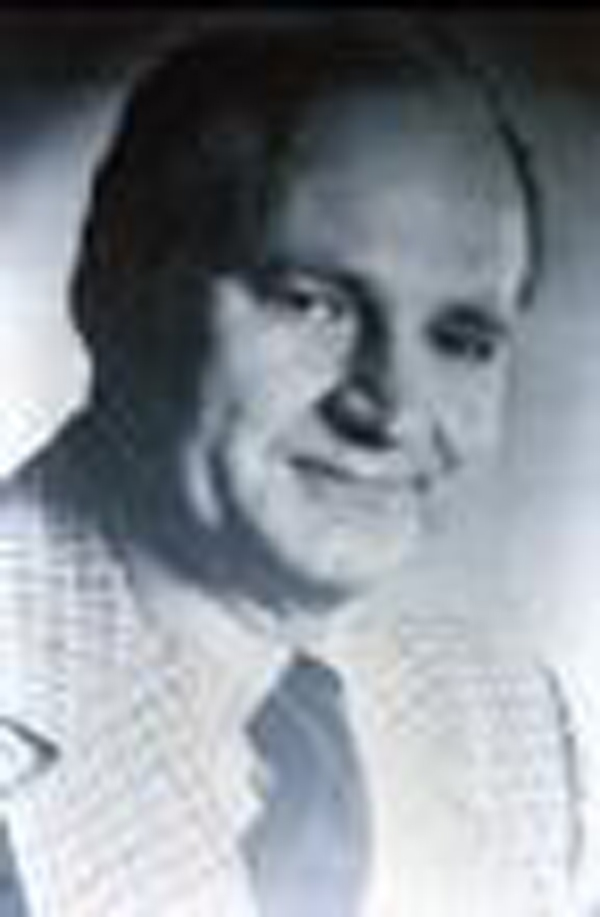
Inducted into: Builder Division in 1992
Inducted into: Builder of the Bowling Industry in 1974
Location: Aurora
Deceased: DEC
- Builder
- Industry
No one has had more impact on the bowling equipment used today than Oskar Kinzler.
Born in Germany in 1923, Oskar emigrated to Canada in 1954 with his wife Trudi and daughter Evelyn. Following several small manufacturing jobs, Oskar joined Phillips Electronics, who were experienced in the production of an automatic 5 pinsetter, which would be called the "Double Diamond" machine, and the bowling industry would never be the same.
Prior to this time, the specifications for the bowling pin was a "graceful" curve to the belly. Measurements were only taken at the head, neck, the band groove and the bottom. Oskar recognized that each pin had to be of uniform measurement, especially if the newly developed automatic pinsetters were going to operate efficiently. As a result, Oskar, along with Percy Blanchard and Roy Richards, formed Professional Bowling Services Ltd. To refinish pins to the new standard.
With the pin reconditioning business firmly in place, the company also serviced the automatic pinsetters that were now being installed throughout Ontario. Oskar’s attention now switched to the band. As a technician, he knew that there wasn’t enough rubber in the band and this product was most important for elasticity and scoring. While on a European trip, Oskar worked with a rubber company in Austria and developed a blue coloured band but he lacked the advertising exposure to tell the industry about his idea. However, during the 1961-62 televised bowling series from O’Connor Bowl, Oskar got his big break. He was the mechanic for the pinsetters at O’Connor Bowl during the show, and watched the bowlers battle tough scoring conditions. Without anyone knowing, Oskar put his bands on the pin and scoring increased dramatically. Emcee Fred Sagambati coined the phrase, "Blue Band" and from across Canada, orders poured in for the new high scoring band. Soon after, manufacturing switched from Austria to Canada and the Firestone Tire Company in Hamilton.
Oskar’s attention now switched to the pinsetting machines. In Europe, he had seen nine pin string machines and soon realized that five pins would also work on strings, even more efficiently tan the nine pin version. Initially, 40 machines manufactured by Spiethe, were imported and the first test centre was Frank Price at ABC Bowl in Richmond Hill. Oskar invited all of the top bowlers to try the new string pinsetters and used their comments to improve his innovation. Aware of the potential success of new concept, the Schmid Company, who had originally turned down the string machines, now welcomed Oskar & Professional Bowling and together they developed the machine we know today.
With the backing of the Toronto Dominion Bank, Professional Bowling sold more than 4000 machines across Canada and today more than 75% of pinsetters in operation are the string variety. Moreover, the machine has kept is value and used machines command nearly the same price as new ones. Also, says Oskar with pride, not one PBS centre went out of business due to failure of the string machine pinsetter.
During his business career, Oskar realized the importance of diversification. His greatest success was in the pin trade as his "Blue Star" ten pin received ABC approval and sold throughout Canada, Germany, Australia and very successfully in Japan during their bowling boom in the early sixties.
Other ventures met with more moderate success as Oskar and Professional Bowling investigated products in swimming pool industry and Oskar even develop his own horse stall.
Today, Oskar is semi-retired and lives in Aurora with his wife Trudi, spending winters in Florida. His daughter, Evie, has become an accomplished horsewoman and is a recognized judge by the Equestrian Federation, while son-in-law Bill is a successful architect.
With so many memories, Oskar has plans to write a book and the title may be…Bowling Made it Possible…possible enough to be inducted to the 5 Pin Bowling Hall of Fame!
Oskar Kinzler was born in Germany in 1923. After serving as a pilot during the war, he emigrated to Canada in 1954 with his wife Trudi and daughter Evelyn. He soon became employed at Philips where he joined the team which produced the first working models of the Double Diamond automatic five-pinsetter.
Soon after, he joined Metro Bowl in Toronto as service manager and gained the opportunity to study the bowling industry from the proprietor’s standpoint. He quickly learned that for pinsetters to operate properly, bowling pins must be consistent in size and shape. As a result of this, Oskar organized Professional Bowling Service Limited along with Percy Blanchard and Roy Richards.
Improved production techniques enabled PBS to manufacture the first plastic coated pins in Canada and soon after, Oskar himself, developed the formula for the famous Blue Bands.
Next PBS turned its’ attention to the pinsetter problem and began the task of adapting automatic string machines to the Canadian five-pin game; ultimately leading to the development of the well know PBS pinsetter.
Today, Oskar is still President of PBS and resides in Oak Ridges, Ontario. His chief hobby is show horses and his daughter was recently selected by the Canadian Equestrian Team for the Rothman’s 76er scholarship program.
Oskar has been a major influence in the world of Canadian bowling. He has supported both the proprietors and bowlers organizations and he has encouraged the development of all phases of the game.